Last week, several things happened that I’ve been dreading for most of my career in US national security.
On Friday, a mathematician at Anthropic, the artificial intelligence company, announced that he and the company’s AI model had proved the Riemann hypothesis, a puzzle about prime numbers that has defeated the best minds in mathematics since 1859.
The machine reportedly cracked the problem that geniuses have been labouring on for 167 years in about six weeks. Independent mathematicians have confirmed this appears to be correct, setting the field afire. It’s been called one of the biggest breakthroughs in the history of mathematics.
Yet the people building these systems are hardly popping the champagne. The reaction from my friends and former colleagues inside AI companies is rather the opposite. Alexandr Wang, Meta’s chief AI officer, wrote that it’s “hard to imagine a world where humanity can maintain control” of AI that is constantly improving without limits. That’s one of the top industry figures saying out loud what his colleagues have been panicking about privately over beers with friends.
On Tuesday, Axios reported that many employees at Anthropic and OpenAI no longer believe their most powerful models can be safely released, citing more than two dozen sources. They indicate that their unreleased systems are far beyond the capabilities of what’s publicly available, and some are even fearful of maintaining those non-public capabilities. The chief information security officer at a top AI company told me last year that his biggest fear wasn’t people hacking into its networks but that systems it was building might break out.
I think we’ve crossed the Rubicon. And I can tell you from experience that we’re not ready.
At the Department of Homeland Security, I helped oversee America’s preparations for its worst days. We helmed contingency planning for weapons of mass destruction, the breakout of pandemics, attacks on the power grid and everything in between. It was partly my job to think about the unthinkable and make sure the government had a plan, lest we sleepwalk into another “failure of imagination” like the one that led to September 11.
At one point, I pushed for a national-level exercise on a scenario few in Washington wanted to touch: what happens if an advanced AI system slips out of human control and starts attacking our infrastructure. The idea was pretty much laughed out of the room. Officials called it a “Terminator scenario” and too much like science fiction. We ran a hurricane drill instead.
If you’d asked me then to rate our readiness for an AI crisis on a scale of one to ten, with one being the least prepared, I’d have said zero. Even our best experts weren’t tracking what was happening in AI labs on the West Coast and what might be coming for us in a few years. That was before Donald Trump came back and started tearing up the cyber defence bureaucracy.
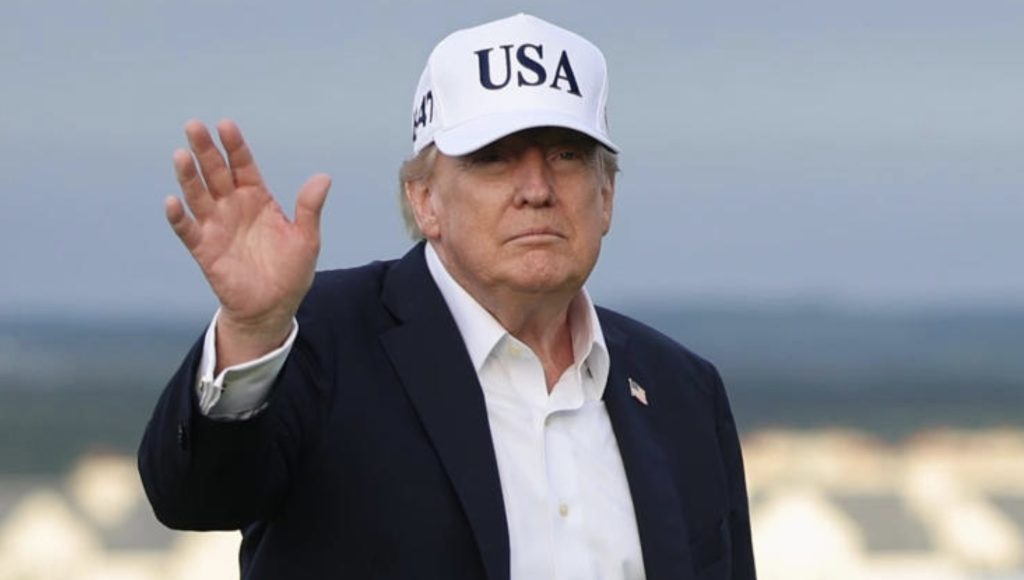
In his second term, Trump scrapped his predecessor’s AI safety order at the industry’s urging. He set up a Justice Department task force to sue US states that try to write their own AI rules. His administration has fired thousands of experts across the agencies that defend America’s networks, including the main DHS cyber agency, which I helped create and which he signed into law. That agency has been gutted, with its handful of remaining AI experts confessing that it’s a “skeleton crew” over there. (To understand why Trump would gut a cyber defence agency, you need only look back to 2020 when the head of that agency — my former colleague, Chris Krebs — said the 2020 election was secure, for which Trump fired him by tweet. The President had wanted him to say the election was compromised.)
Read More: Trump and his elite band of hypocrites are building bunkers and leaving us to rot











