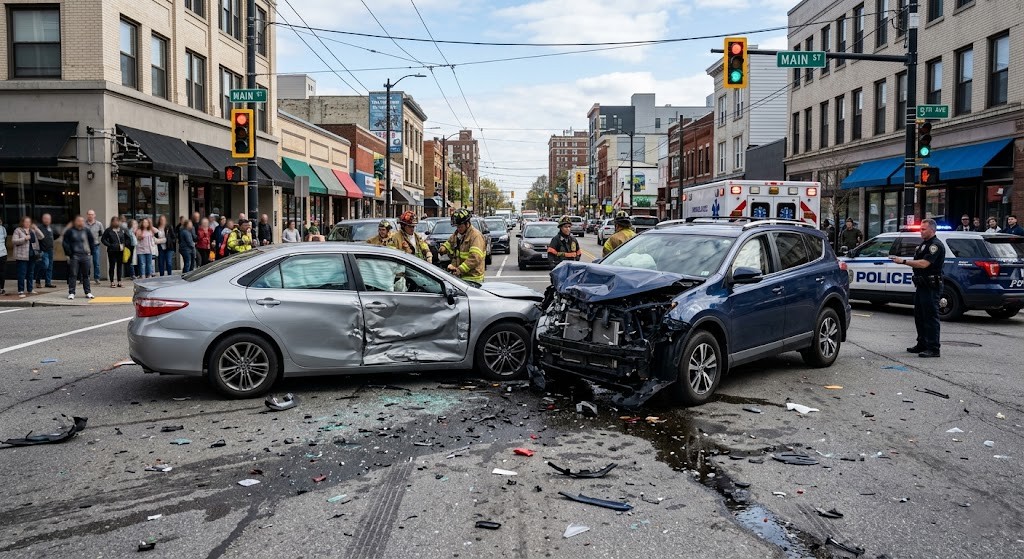
Intersections are all around us. You use them daily without giving much thought to them. However, intersections are one of the most dangerous spots in your driving path, where the majority of car accidents occur.
This is due to a number of factors, such as vehicles moving in various directions, blind spots, and drivers making split-second decisions. A single error could result in a serious intersection crash affecting many vehicles and lives.
Intersection Accidents
During an intersection accident, the impact may be sudden. Cars may:
- Side-swipe another vehicle
- Collide head-on while turning
- T-bone another vehicle while attempting to beat a traffic light
Such accidents tend to be severe since they typically occur at high speeds and with little warning.
Certain locations report a higher incidence of intersection-related accidents. Urban centers with intense traffic conditions, such as Chicago, experience a higher likelihood of accidents.
Phoenix and other fast-developing urban environments feature wider roads and higher speeds, which contribute to more hazardous accidents at intersections.
Following the accident, you should wait for the police to arrive, submit reports, and notify insurance providers. Afterwards, liability will become the center of attention.
Why Intersection Can Be Dangerous
Intersection involves lots of elements coming into play at once. That includes:
- Straight-going cars
- Left-turning vehicles
- Right-turning vehicles
- Pedestrians crossing the street
All that creates a more complicated situation than usual.
Most of the accidents that occur involve speeding through the intersections. This can be trying to beat the yellow light, making a turn before it is safe, or misjudging the speed of the other driver. A simple mistake can cause severe accidents.
Running Through Red Lights
One of the most common causes of accidents at intersections is running through a red light. It results in side-impact accidents, or T-bones. These accidents are the most dangerous since the car is not built to sustain impact from the side. There is no cushioning, so injuries are often serious.
Turning Left
Motorists need to observe oncoming vehicles and assess their speed and distances before making any turns. Responding promptly reduces the mistakes of motorists turning right and colliding with another vehicle.
Distracted Driving
It is one of the most frequent causes of accidents. Motorists who are distracted are more prone to crashing at intersections. Examples of distracted driving include texting, calling, or getting too involved with conversations inside the car. Even a split second of distraction in an intersection could be dangerous.
Consequences of Intersection Collisions
Intersection collisions have several significant consequences. Injuries can be more serious than imagined. Side impact and turning collisions can result in brain and bone injuries. Recovery from such conditions is likely to take time.
In some cases, determining the driver at fault is difficult. Disagreements can arise because of:
- Right-of-way questions
- Traffic-light color (red or yellow)
- Speeding concerns
This complicates the claims process. Due to the complexity of these cases, you might experience delays in receiving an insurance claim or starting a liability dispute.
Impact on Your Life
Intersection accidents have a significant impact on your life. You will have financial hardship from all the medical expenses, automobile repair bills, and, in some cases, lost income. Even a short recovery can be expensive.
Following an accident, you can go through emotional stress leading to driving fears and traffic-related stress, especially in intersections. This will impact your self-assurance on the road.
Key Takeaways
- Intersections represent critical danger zones since multiple activities take place simultaneously.
- Disobeying traffic signals and making hazardous turns results in most collisions.
- Left turns pose particular hazards.
- Distractions contribute to accident occurrence.
- Accident probability varies with location and traffic.
- Collision injuries tend to be severe, resulting in lawsuits.
- Good driving practices can minimize risks.










