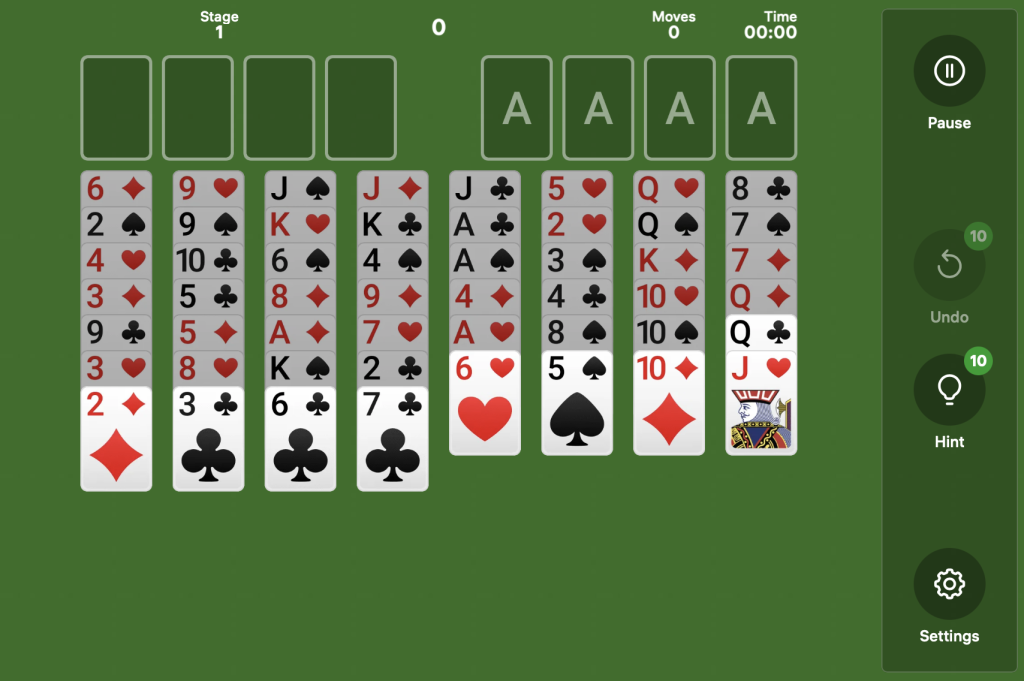
Free cell is often viewed as a simple card game meant to pass the time, yet anyone who has played it long enough knows it rewards far more than idle clicking. Behind every seemingly straightforward layout is a layered puzzle that tests patience, foresight, and the ability to adapt under pressure. Although the game is played on a small digital screen with ordinary playing cards, the thinking it requires mirrors real strategic planning skills used in business, project management, and everyday decision-making.
When players study a free cell board, they are not only moving cards. They are analyzing possibilities, weighing risks, and designing a pathway from chaos to order. This makes free cell a surprisingly effective metaphor for understanding how strategy works in practice. Its challenges illustrate why planning is not only about having a goal, but also about shaping a series of informed steps that guide you toward that goal.
In this article, we look at the deeper lessons that free cell teaches about strategic planning. Whether you manage projects, run a team, or simply like improving your decision-making abilities, the game offers insights that translate far beyond the screen.
Understanding the Structure Before Taking Action
One of the first habits free cell players develop is pausing before making the initial move. A beginner usually drags the first playable card without thinking, but experienced players know that the game is won or lost in the opening evaluation. You must scan the tableau, identify the most trapped cards, and determine how much room you have to maneuver.
This reflects a fundamental principle of strategic planning. Before acting, you need to understand the landscape. Jumping in too quickly often creates more work later, because the first unplanned action can trigger a chain reaction that leads to more obstacles.
Good strategic planners begin with a complete assessment. They ask:
- Where are the bottlenecks
- Which elements are most essential
- What resources are available
- What constraints or limitations exist
- What moves create the most long-term flexibility
In free cell, you might notice a long sequence buried under a high-ranking card or a key card stuck behind its opposite color. In the real world, these are similar to hidden dependencies in a project or sudden complications in a work plan. A clear overview helps you avoid unintended consequences and prepares you to make more effective choices.
The Importance of Setting Short-Term and Long-Term Goals
Winning at free cell requires balancing immediate opportunities with future goals. A tempting move may clear a column right away, but that action may trap an important card or use up a free cell unnecessarily. Every player learns that some attractive moves are actually deceptive. Success depends on resisting the urge to follow a short-term gain that undermines long-term structure.
Strategic planning works exactly the same way. Leaders and planners must decide which steps serve the end goal and which steps simply feel productive in the moment. Many projects stall because the team chooses actions that look like progress but fail to build toward the outcome.
Free cell teaches you to ask:
- Does this move open new opportunities
- Does it reduce mobility later
- Does it support the larger objective, such as freeing an ace or opening a new column
This careful balance trains your mind to think in layers. You learn that goals are interconnected. Achieving one goal often depends on sequencing your actions in the right order. In business planning, this is equivalent to setting milestones, prioritizing tasks, and choosing actions that build momentum rather than disrupt it.
Resource Management: Making Every Space Count
The name free cell comes from the four empty spaces at the top of the board, yet many players underestimate how powerful these spaces are. They represent your temporary storage, your flexible workspace, and your emergency backup. Without smart use of these cells, even a simple arrangement becomes impossible to solve.
The same is true for strategic planning in any field. Resources are always limited. You may have only a small budget, a handful of team members, or a tight deadline. Just as free cell restricts your number of available holding spaces, real life restricts your available tools and support. How well you manage these limitations affects whether your plan succeeds.
The game shows that:
- Using all resources at once is risky
- Leaving some resources unused creates strategic breathing room
- Well-timed use of resources can unlock entire chains of progress
Players soon realize that filling every free cell creates paralysis. You have nowhere to place cards temporarily, which reduces your options and blocks potential solutions. Similarly, when a team commits all resources early in a plan, it becomes difficult to handle unexpected challenges later.
Good resource management involves knowing when to hold back. It involves saving space for the unknown. Free cell serves as a constant reminder that strategic reserve is not wasted capacity but a protective measure that ensures flexibility.
Thinking Several Steps Ahead
Free cell encourages the same kind of predictive thinking used in chess. A single card move seems small, but that move affects the possibilities for all future sequences. You must imagine not only what will happen immediately, but also what the board will look like three, four, or five moves later.
Similarly, strategic planners look beyond the next task. They consider how each decision interacts with future decisions, what risks may appear, and how the plan will unfold over time. Thinking ahead helps prevent conflict between steps and reduces the chance of reversing progress.
In free cell, players often rehearse mentally:
- If I move this red nine, can I later place the black eight
- Will this sequence open a path to free the king
- Will filling this column prevent me from shifting a key card
This forward-looking mindset translates directly into project planning. Leaders who anticipate complications are better equipped to adjust quickly and avoid setbacks. The game becomes a miniature training ground for understanding chain reactions.
Recognizing Patterns and Learning from Them
The more you play free cell, the more you notice recurring patterns. Certain layouts remind you of previous games, and you recall which strategies worked before. You begin to understand that certain card positions frequently cause traps and that certain sequences tend to be powerful.
Strategic planning benefits from the same method. Experience teaches you which plans succeed, which risks repeat themselves, and which situations require specific approaches. Patterns emerge in customer behavior, market cycles, team performance, or workflow efficiency.
Free cell encourages players to build a mental library of:
- Proven techniques
- Common bottlenecks
- Reliable sequences
- Moves that create space
- Moves that create unnecessary complications
This pattern recognition becomes invaluable. It speeds up decision-making, improves accuracy, and builds confidence. In professional settings, recognizing patterns lets you spot opportunities sooner and avoid mistakes you have encountered before.
Staying Calm in Moments of Pressure
Anyone who has played free cell knows the sinking feeling of reaching a point where the board looks hopeless. You have few moves left, the free cells are nearly full, and the tableau is tight. During these moments, your success depends entirely on your ability to stay calm and evaluate the board with a clear mind.
Strategic planning requires the same emotional discipline. Projects often encounter setbacks that can create frustration or stress. The ability to think calmly and logically when facing difficulty is what allows leaders to salvage plans and discover new routes forward.
Free cell teaches players to:
- Pause and regroup before making hasty moves
- Undo actions when necessary
- Reevaluate the entire layout
- Look for hidden possibilities
These habits strengthen resilience. Instead of panicking, you develop the instinct to stop, breathe, and analyze the situation again. This approach prevents impulsive decisions and supports better long-term planning.
Adaptability: Changing Plans When New Moves Appear
Even the best free cell strategy can require adjustments. You might begin with a specific sequence in mind, only to discover that a move you expected to work blocks an important card. In that moment, you must adapt. Victory depends on your willingness to revise your plan, redirect your efforts, or explore a new path entirely.
Strategic planning is never fixed. Market conditions shift, resources change, team structures evolve, and unexpected obstacles arise. Flexibility becomes a core skill. A plan that cannot adapt will fail, even if the original idea was strong.
Free cell encourages players to accept that:
- Plans are guides, not rigid instructions
- The situation evolves with each move
- Adjusting strategy is not a setback but a sign of improvement
In business or personal planning, this kind of adaptability keeps you from becoming trapped in outdated assumptions. It strengthens your ability to pivot and find solutions even when conditions change.
Celebrating Small Wins and Staying Motivated
Although free cell is a strategic puzzle, it also provides a sense of satisfaction through small wins. Clearing a column feels rewarding. Freeing an ace feels like progress. Creating an entire sequence from king to ace is a moment of triumph. These small achievements keep you engaged, even when the game becomes difficult.
Strategic planning involves long timelines, demanding work, and complex decisions. Without moments of accomplishment, it becomes easy to lose motivation. Recognizing progress at each stage helps maintain momentum. It reminds teams that they are moving forward, even if the final goal is far away.
Free cell teaches this naturally. Each cleared column is like completing a milestone. Each free cell you empty again is a regained resource. These micro successes reinforce focus, discipline, and encouragement.
Accepting That Mistakes Are Part of the Process
Free cell includes an undo button, and most players use it freely. Mistakes are expected, and undoing a move is not a sign of defeat. It is part of exploring possibilities. You try, you observe the outcome, and you adjust.
In strategic planning, mistakes are learning tools rather than failures. They help refine the plan and reveal what does not work. The key is maintaining an environment where adjustments are welcome and experimentation is valued.
Free cell offers a simple but powerful lesson: mistakes provide information. Every wrong move teaches you something useful for future decisions.
Final Thoughts
Free cell may appear to be a quiet, solitary game, yet it nurtures many of the same abilities that define strong strategic thinkers. By playing, you sharpen your awareness, strengthen your decision-making skills, and practice managing limited resources. You learn to balance short-term gains with long-term goals, adapt when challenges appear, and recognize patterns that help you navigate complexity.
These lessons apply directly to the challenges professionals face every day. Planning a project, managing a team, or guiding a business requires the same thoughtful approach you use when arranging cards on the screen. Free cell transforms these concepts from abstract ideas into practical habits.
The next time you open a new game, remember that you are not only arranging cards. You are training your mind to think strategically. You are practicing patience, structure, and flexibility. And in a world full of complex choices, these skills are more valuable than ever.










