- Digital labour is becoming more common in the workplace, but few widely accepted rules have been implemented for governing it.
- AI is being used for more regular tasks such as drafting proposals and handling inquiries.
- Managing this technology’s implementation and governance is a key leadership challenge.
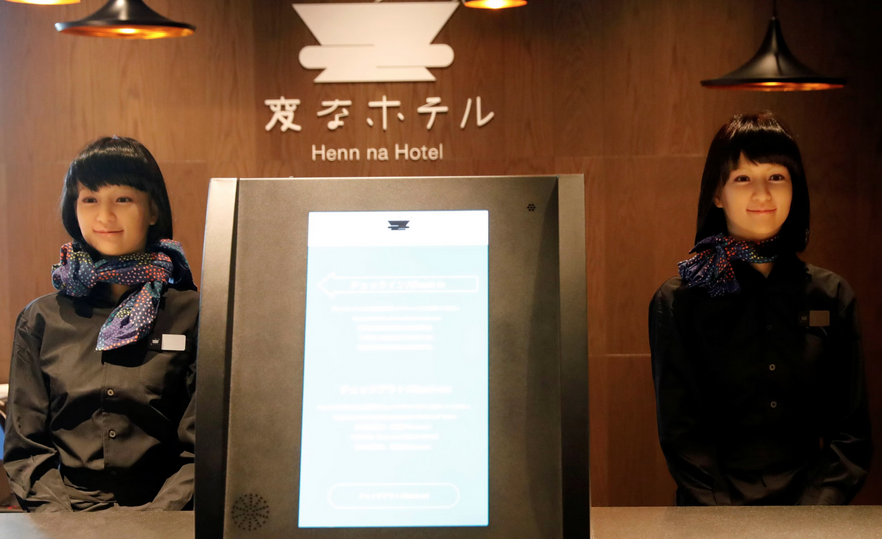
Digital labour is becoming more common in the workplace. In Japan, the Henn-na Hotel is staffed almost entirely by robots – from check-in to concierge, while in the UK, talent company Adecco Group has used agentic AI for tasks such as pre-screening of candidates.
Meanwhile, AI-powered robots deployed by police patrol public areas and interact directly with citizens in Dubai and in the US, FarmWise has built autonomous machines that weed vast fields with no human labour. In Singapore, robot baristas are automating more repetitive tasks of the coffeeshop experience, freeing up staff for other customer-facing tasks.
While these may seem like extreme examples, it’s not hard to find artificial intelligence (AI) taking on more common roles and tasks previously done exclusively by humans in other workplaces – such as drafting proposals, reconciling invoices and handling support inquiries. GitHub Co-pilot, for example, can execute coding tasks to free up coders for high-level problem solving, while Harvey AI supports lawyers on issues such as contract analysis, due diligence, legal research and drafting.
Read more: Digital labour ethics: Who’s accountable for the AI workforce?











