The American philosopher Richard Rorty argued that literature, not academic treatises, affords a truer insight into an understanding of the human condition. While professors are busy strangling everything with jargon and footnotes, novels and poems are out there doing the real work: showing us what it actually feels like to be alive.
In Contingency, Irony and Solidarity (1989), Rorty suggested that a good novel will expand one’s moral imagination far more than any philosophical tract. Literature is a better moral compass because it throws us into the vivid chaos of individual lives, instead of forcing human experience into some procrustean theoretical framework.
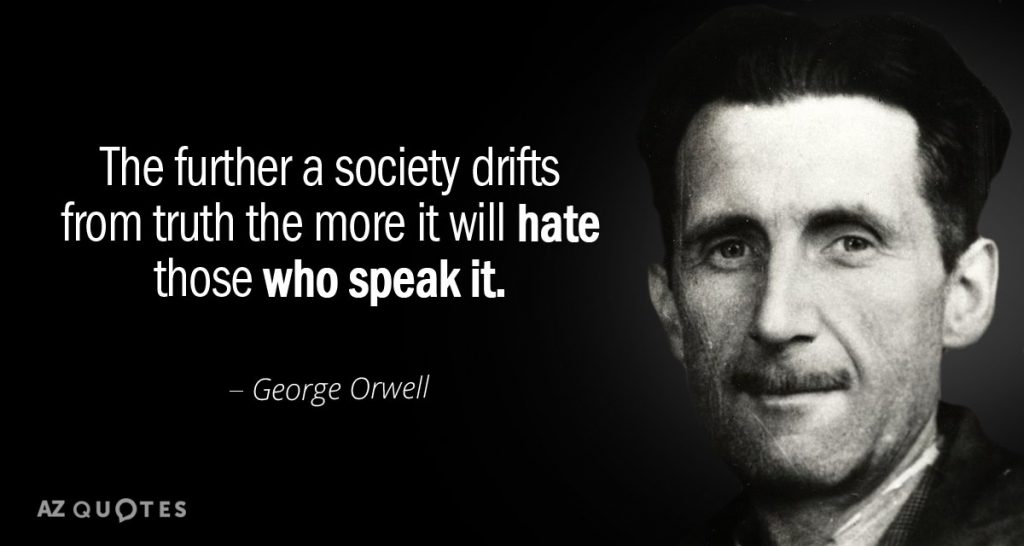
Sometimes a single sentence from Orwell, or Solzhenitsyn, or Camus tells us more about integrity, honour, cruelty and hope than a thousand pages of scholarly ‘analysis’ ever could.
The more I’ve written over the years — be it books, articles or essays — the more I’ve come to appreciate the wisdom of Rorty’s observation: that great literature, not academic gibbering, gets closest to the essence of human affairs. The Greeks, the Bible, the great tragedians — they all saw to the bottom of things long before we in the academy began layering insights with qualifiers, footnotes and the faint aroma of career anxiety.
In fact, much of what we do in the humanities and the (so-called) social sciences is add little more than a gloss on ancient wisdom — restating, reframing and usually complicating what was already known by sharper minds in togas. We supply the lacquer; they built the furniture.
It’s a humbling thought. Most of my own writing, I suspect, merely traces a well-worn path walked by bolder, clearer souls who didn’t need to cite Bourdieu or Foucault to know that power tends to dress itself up as virtue. As Heidegger reminded us, we are thrown into history, not perched above it. Our contributions are brief, partial and prone to error — though hopefully they still matter, at least until the next footnote arrives to disagree.
And so, paraphrasing Rorty, we often find our most reliable guides to the future not in the latest think piece or ideology-addled op-ed, but in the voices of the past — particularly those who speak with brutal clarity about the limits of human nature. Far more illuminating than your average London la-la land liberal (think LBC presenters or, indeed, any paleo-centrist on the BBC), are those writers who grasp that history is not a progressive arc, but more often a cycle of idiocies, well-intended or otherwise.
Which brings me to Rudyard Kipling’s poem, ‘The Gods of the Copybook Headings‘ — a work so perceptive, so uncomfortably accurate, that one wonders why it has not received more attention, even among us jaded traditionalists.
Kipling, of course, has long been out of step with modern sensibilities, being variously dismissed as imperialist, racist or simply unfashionable. At most, we’re allowed to admire the stoic (though still hideously patriarchal) platitudes of If, while ignoring the sharper edges of his worldview.
But the real reason Kipling has been anathema, I suspect, is not his odes to empire, but his unflinching realism. He saw through the utopianism that often passes for political sophistication. And in this respect, ‘The Gods of the Copybook Headings’ is not just a poem — it’s a monumental smackdown of liberal delusion, a reminder that reality, however tiresome, always gets the last word.
Read More: The Return of the Unfashionable Gods











