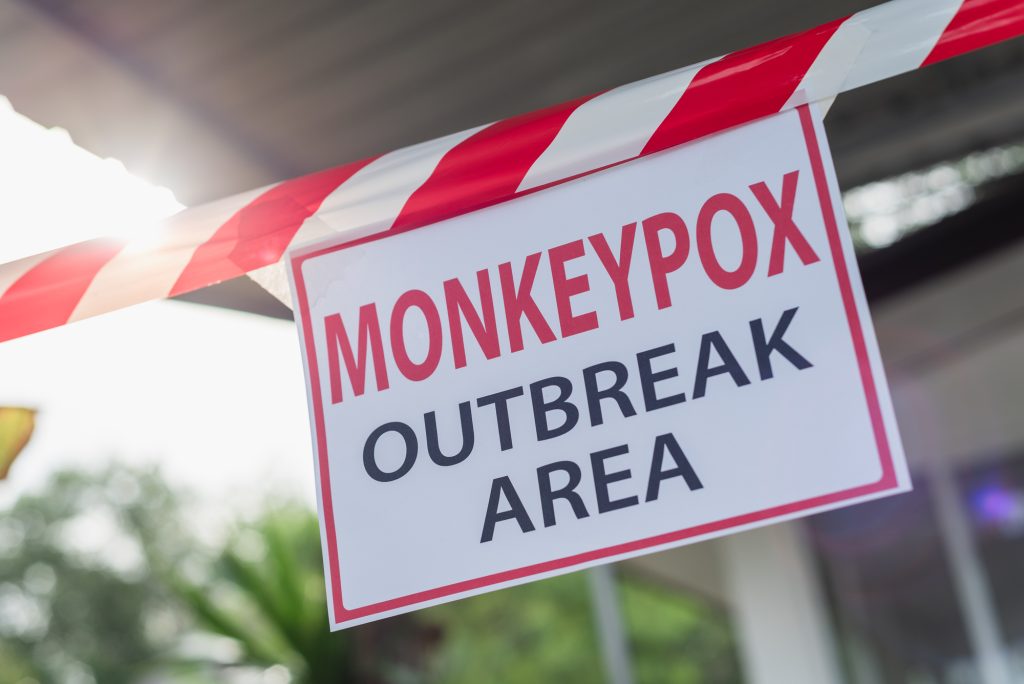
THE global monkeypox enterprise continues. Hardly a week passes without some link to an article about ‘Mpox’, as we are supposed to call it, in Global Health Now. This week we were treated to two links on the same day. And it was all, apparently good news.
The first link from the CIDRAP newsletter of the Center for Infectious Disease Research & Policy at the University of Minnesota reported that, due to intensified public health measures, monkeypox cases were declining in Africa. The measures included surveillance and contact tracking.
But don’t relax yet as the disease continues to spread in some places and show up in others for the first time. Clearly, the surveillance and contact tracing will have to be intensified. If only there were a vaccine; and guess what? There is.
On the home front in the United States, there is more good news. Also reported in CIDRAP, it seems that more adults are now willing to receive the monkeypox vaccine than in 2022. Mind you, this still amounts only to 58 per cent of the population surveyed by the University of Texas.
At least a significant minority of people are not falling for the propaganda. And why should they? Monkeypox vaccines are unnecessary and, what is more, the companies making them either do not know, or will not report, how (in)effective they are.
In developed countries such as the United States, monkeypox is an unpleasant but mild infection which leaves most people unscathed and from which very few die. Those who die are the usual suspects: the immunocompromised. And, similarly to covid, the line between ‘with’ and ‘of’ the infection is extremely blurred. Many of those who are immunocompromised have advanced or untreated HIV and will also have been men who had anal sex with men. This group is especially vulnerable to monkeypox.
Towards the end of last year, in the United States, 63 people had died with or of monkeypox. That represents 0.000019 per cent of the United States population of the 34,063 (0.0103 per cent) who had monkeypox. Even considering a two to ten times underreporting factor for monkeypox (68,126 to 340,630, respectively) this yields an infection fatality rate (IFR) of between 0.092 per cent to 0.018 per cent.
The above figures are only estimates for prevalence, which represents the total number of people with monkeypox at any one time. If we consider prevalence, using CDC (Centers for Disease Control and Prevention) figures, in 2024 only approximately 3,000 people became infected with monkeypox meaning that the annual incidence is only 0.0009 per cent of the population. Hardly a public health emergency.
One of the monkeypox vaccines, the JYNNEOS (also referred to as MVA-BN) is estimated to be between 66 per cent to 89 per cent effective after two doses. These figures refer to relative risk reduction (RRR) which compares the vaccinated with the unvaccinated. But since 2021 during the covid ‘crisis’ we have repeatedly warned in these pages the dangers of referring to RRRs when reporting vaccine efficacy.
The RRR is virtually meaningless based on, as it often is, very low incidences of the disease the vaccine purports to prevent. All it tells you is how much less likely you are to become infected if you are vaccinated compared with someone else who is not. It does not tell you how much less likely you are to become infected if you are vaccinated compared with not being vaccinated, which is the absolute risk reduction (ARR).
Read More – To prevent one monkeypox death, vaccinate 556million people










