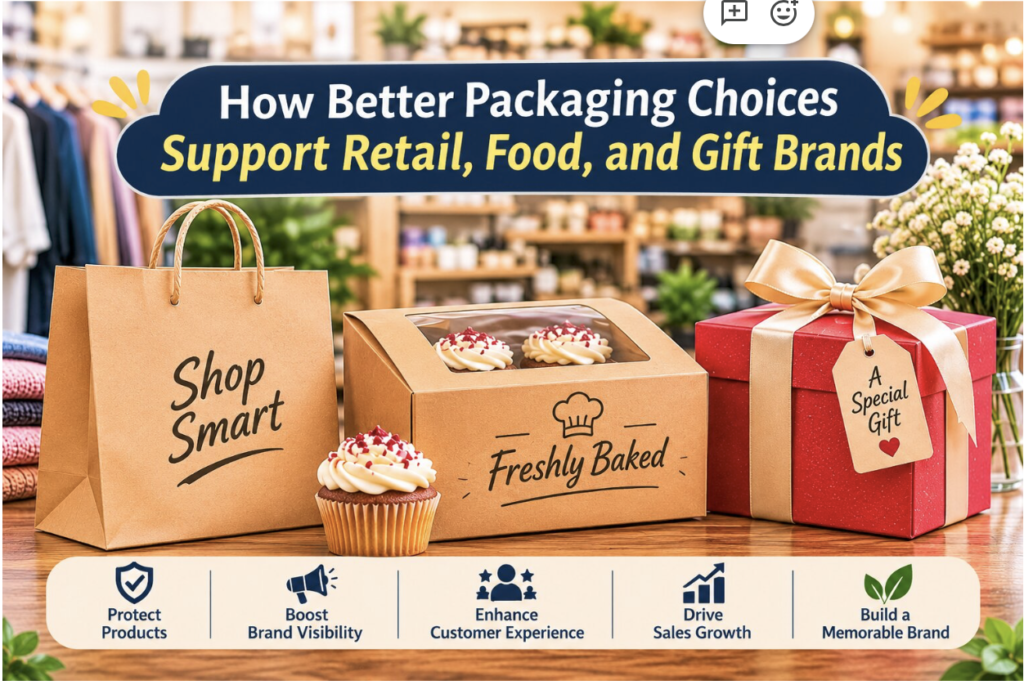
Packaging is often treated as a basic business cost, but it has a direct effect on product condition, presentation, and customer trust. Retail, food, and gift brands face different packaging pressures, and using the same generic approach for every product usually creates weak results.
A stronger approach starts with matching packaging to the product and the environment in which it will be sold or used. When packaging is chosen carefully, it improves handling, supports cleaner presentation, and helps brands look more consistent across different product types.
Where Packaging Usually Goes Wrong
Many brands run into the same packaging problems, especially when packaging is selected quickly or treated as an afterthought. Common issues include:
- Boxes that collapse during storage or delivery
- Packaging that hides the product when visibility matters
- Gift packaging that looks plain or unfinished
- Food packaging that is hard to handle or present cleanly
- Using one generic box style for every product type
These problems affect more than logistics. They influence how products look on shelves, how easily staff can pack them, and how professional the brand appears to customers.
Packaging for Retail and Gift Presentation
Retail and gift products need packaging that looks intentional rather than temporary. Customers often judge value based on structure, finish, and overall presentation before they fully examine the product itself.
This is where cardboard hamper boxes become useful. They support seasonal offers, gift sets, and premium product presentation by combining practical structure with a cleaner finished look. For brands selling gift-ready products, packaging that feels organised and presentable can improve both shelf appeal and unboxing experience.
Gift packaging works best when it protects the product and still looks suitable for direct presentation. Weak or plain packaging can reduce perceived value, even when the product inside is strong.
Why Packaging Influences Buying and Brand Perception
Customers form opinions quickly. Packaging is often one of the first things they notice in retail, delivery, or event environments.
Strong packaging communicates care and consistency. Weak packaging can create the opposite effect, even if the product itself is high quality. This is why packaging should be treated as part of brand presentation, not only as a shipping requirement.
In practical terms, better packaging helps products look cleaner, arrive in better condition, and remain easier to handle across storage, display, and customer delivery.
Packaging for Food and Specialty Items
Food packaging has different priorities from gift packaging. It needs to support product protection, practical handling, and clear presentation, especially in busy retail or service environments.
Specialty food items often need packaging designed around visibility and convenience. Formats such as custom popsicle bags are used for this reason. They help brands present food products more cleanly while still supporting practical packing and handling needs.
When food packaging is poorly matched to the product, it can create mess, reduce presentation quality, or make service slower. Packaging that fits the product properly helps improve both operations and customer experience.
Why Brands Need More Than One Packaging Type
Most brands sell more than one kind of product. Because of that, one packaging style is rarely enough.
A complete custom packaging solution is often more effective than forcing every product into the same box or bag style. Retail gift products, food items, and standard commercial goods all have different structural needs. Using the right format for each category helps improve protection, presentation, and handling at the same time.
Brands that build packaging around product type usually create a more consistent and practical setup across their range.
Practical Packaging Decision Guide
Before choosing packaging, brands should evaluate a few practical factors. A simple framework helps avoid decisions that look good in concept but fail in real use.
| Need | Best Focus | Why It Matters |
| Product protection | Strength and fit | Reduces damage and returns |
| Shelf or counter display | Clean structure | Improves first impression |
| Gift presentation | Finished look | Increases perceived value |
| Food handling | Practical format | Supports cleaner service and packaging |
| Brand consistency | Matching design | Makes product range look organised |
This type of evaluation helps teams choose packaging based on real product needs rather than convenience alone.
How Better Packaging Improves Daily Operations
When packaging is matched correctly to the product, daily operations usually become easier and more consistent.
Staff can pack faster because the packaging already fits the product instead of requiring constant adjustment. Products are less likely to arrive damaged, which reduces the time spent handling complaints, replacements, or returns. Displays also look cleaner, making retail presentations easier to maintain throughout the day.
Branding appears more consistent across different product lines, which helps the overall range look organised rather than mixed or unfinished. These improvements may seem small individually, but together they support a more reliable customer experience and reduce pressure on day-to-day operations.
Better packaging also reduces repeated problem-solving. Instead of constantly adjusting weak boxes or poorly fitted bags, teams can rely on packaging that already suits the product and the selling environment. This saves time during packing, improves handling during storage and transport, and helps maintain a more professional presentation from the first point of contact through to final delivery.
Final Thoughts
Packaging works best when it matches both the product and the way it will be sold or used. Retail, food, and gift brands all benefit from packaging that supports protection, presentation, and practical handling.
Stronger packaging decisions improve daily operations and help products look more professional from the first point of contact. Brands that treat packaging as part of the customer experience are more likely to create cleaner, more consistent results across their product range.
Thoughtful packaging choices from suppliers such as Tycoon Packaging can help businesses improve both presentation and performance without unnecessary complexity.










