
Bayer bought Monsanto in 2018 for $63 billion —a few months before Monsanto lost its first liability case for causing non-Hodgkins lymphoma. I was not a close observer of the case, but the win seemed to hinge on documents obtained during discovery that revealed Monsanto knew a great deal about the injuries its product caused but deliberately hid those findings.
Once there was a win—and the jury awarded the plaintiff with non-Hodgkin’s lymphoma hundreds of millions, later reduced—the bandwagon effect began, with other lawyers seeking plaintiffs to sue Monsanto. Eventually over 100,000 plaintiffs were suing Monsanto/Bayer for cancers related to glyphosate, the so-called active ingredient in Roundup. There are other ingredients that are probably toxic too, but they were not at issue. Most plaintiffs were homeowners. Bayer then removed glyphosate from Roundup, producing a new formulation for homeowners.
Still, there were more and more cases and more and more wins in state courts due to Monsanto/Bayer’s failure to warn of a cancer risk. Then Monsanto settled about 50,000 of the cases.
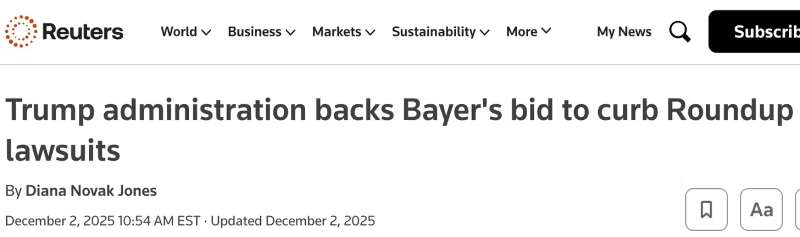
Not only did Bayer pay out a King’s ransom, but its stock price tanked. Desperate times call for desperate measures. Bayer, a German company, hired a Texan, Bill Anderson, as CEO to come to its aid. CEO Anderson’s career hinged on stanching Bayer’s bleed. He initiated a very expensive series of legal and political strategies in the hopes that one would be successful. He also formed a new agricultural industry lobby group with a huge advertising budget.
CEO Anderson got the Bayer board to agree to setting aside around $17 billion for this problem. With $10 billion already spent (the same figure reported 5 months ago) that left him with about $7.6 billion to deal with the 67,000 pending cases and to end the litigation for good.
Read More: To Win at All Costs











