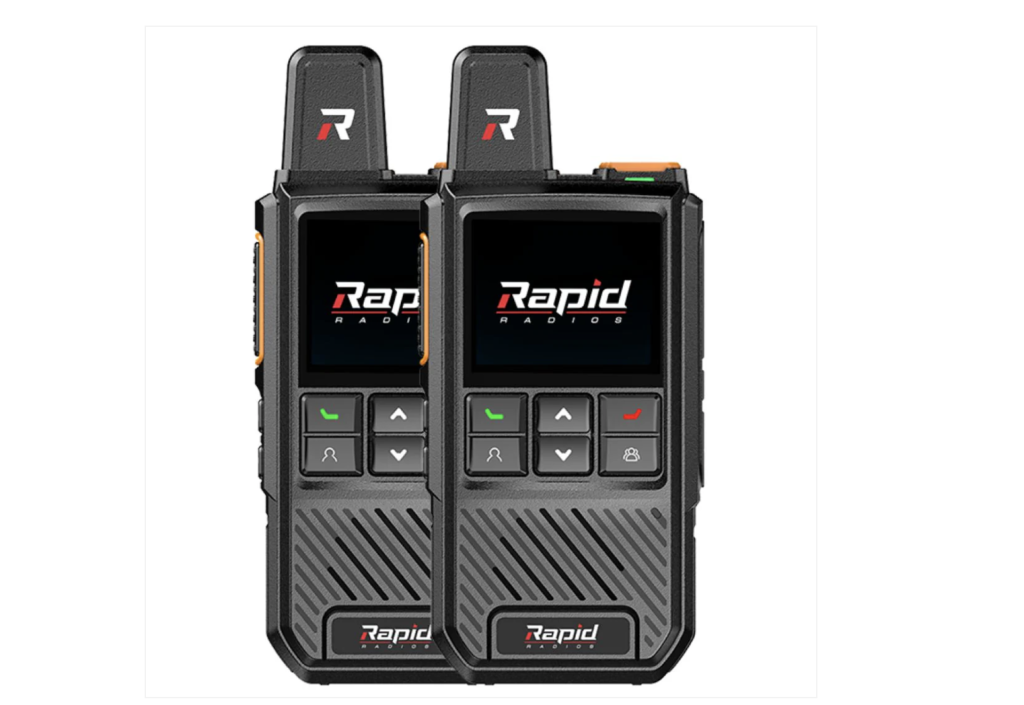
Someone pulls a device out of the box. Holds it up. Turns it over.
Then comes the inevitable question:
“Do two-way radios actually work?”
Not sarcastically. Just honestly.
Because we live in a world of smartphones, messaging apps, Wi-Fi networks, and blinking signal bars. Communication feels complicated now. So when someone hands you a push-to-talk device that looks almost… simple… it raises eyebrows.
Press one button and talk?
That’s it?
Turns out, yes. But once people start using them, the questions shift quickly. Not whether they work—but how well.
How far do they reach?
Are they difficult to set up?
And do they actually hold up when things get busy?
Let’s walk through the big ones.
First Question: How Far Do Two-Way Radios Actually Reach?
Coverage is usually the first thing people want to know.
And the honest answer? It depends.
Traditional two-way radio communicate using direct radio signals. One device sends a signal through the air, and another receives it. No cell towers. No Wi-Fi. Just radio waves doing their thing.
In open outdoor areas, that signal can travel several miles.
But real life rarely looks like a wide-open field.
Buildings interfere. Hills interrupt signals. Dense cities—full of steel and concrete—can shorten the effective range pretty quickly.
Which is why modern systems evolved.
Some newer solutions, like the ones discussed on this page about two-way radio reliability, extend coverage beyond traditional radio limits by using network-supported push-to-talk technology.
Same button. Same instant communication.
Just… much bigger reach.
Second Question: Is Setup Complicated?
People often assume radios require technical configuration.
Programming. Frequencies. Settings that sound like something out of an engineering manual.
The reality?
Most systems are surprisingly simple.
Turn it on. Select a channel. Start talking.
That’s it.
For businesses or teams deploying radios across larger groups, there may be a little structure involved—assigning channels for departments, setting communication guidelines, that sort of thing.
But compared to installing apps, managing accounts, or troubleshooting connectivity issues?
Radios are refreshingly low-maintenance.
Which is exactly why industries that move fast—construction, logistics, security, event operations—still rely on them.
Nobody wants to troubleshoot software when a forklift is waiting for instructions.
Third Question: Do They Hold Up in Busy Environments?
This is where radios really shine.
Busy environments are chaotic. Think warehouses during peak hours. Construction sites mid-shift. Event venues when thousands of people suddenly arrive at once.
Phones struggle here.
Calls get missed. Messages sit unread. Notifications pile up while people focus on their tasks.
Two-way radios cut through that noise.
Press the button. Speak. Everyone listening hears the update instantly.
Need equipment moved? Say it.
Need assistance? Call it.
Need to stop a lift immediately? One message handles it.
No dialing. No waiting.
Communication moves at the same speed as the work.
And in fast environments, that matters more than people realize.
Fourth Question: What About Emergencies?
Here’s a scenario nobody likes thinking about—but everyone plans for.
Power outages. Storm damage. Large-scale emergencies.
When infrastructure fails, communication often becomes the first casualty. Cell networks get overloaded. Internet connections disappear.
Two-way radios avoid many of those problems because they operate independently of the systems that typically break during disasters.
That’s one reason emergency responders rely heavily on radio communication.
When everything else struggles, radios often keep working.
Simple technology tends to be resilient technology.
So… Do Two-Way Radios Really Work?
Short answer: yes.
Longer answer: they work because they focus on doing one thing extremely well.
Instant communication.
No apps.
No waiting.
No complicated interfaces.
Just a direct connection between people who need to coordinate quickly.
In a world full of complicated communication tools, that kind of simplicity turns out to be surprisingly powerful.
Sometimes the most reliable systems aren’t the newest ones.
They’re the ones built to work the moment you press the button.










