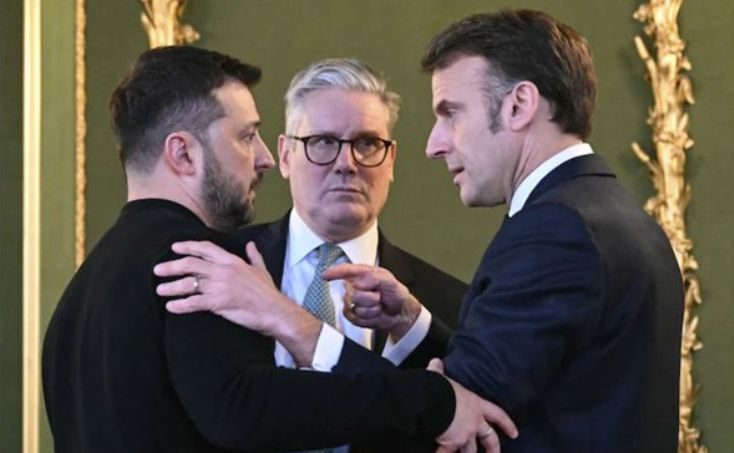
Something strange is happening to Britain’s foreign policy discourse. It’s not just that ideology is drifting from reality – a familiar enough feature of the post-Blair era – but that the performance of strategy now seems to matter more than the strategy itself. Nowhere is this clearer than in Keir Starmer’s attempt to assemble an appropriately Blairite-sounding ‘coalition of the willing’ to ‘keep the peace’ in Ukraine.
According to the Telegraph, this plan has been dismissed by senior military sources as “political theatre”, with one stating bluntly: “There’s no military sense in it.”
Another was more specific. “There are about 700,000 Russians in and around Ukraine and over a million Ukrainians under arms,” he noted, before asking, incredulously: “What is a 10,000-international force based in the west of the country over 400km from the frontline meant to do? What is the mission? What is its legitimacy? What are the rules of engagement? How it is commanded, supplied and housed? How long is it there for and why? No one knows.”
No one knows, no. But, heck, it sure sounds good – and Labour focus groups have no doubt indicated it’s playing well in the marginals.
Alas, the mistake both officials made was to assume this was ever to be assessed in operational terms. Because as another, decidedly on-message Army source goes on to explain, the coalition is less about actuality than about “galvanising political signalling of our enduring commitment to Ukraine’s security”.
Galvanising political signalling of our enduring commitment to Ukraine’s security. This is language unmoored from material reality; the grammar of geopolitics (“galvanising support for Ukraine’s security”) now detached from the logic of war by two participles, two adjectives, and three possessive constructions that leave us with… well, nothing, really.












