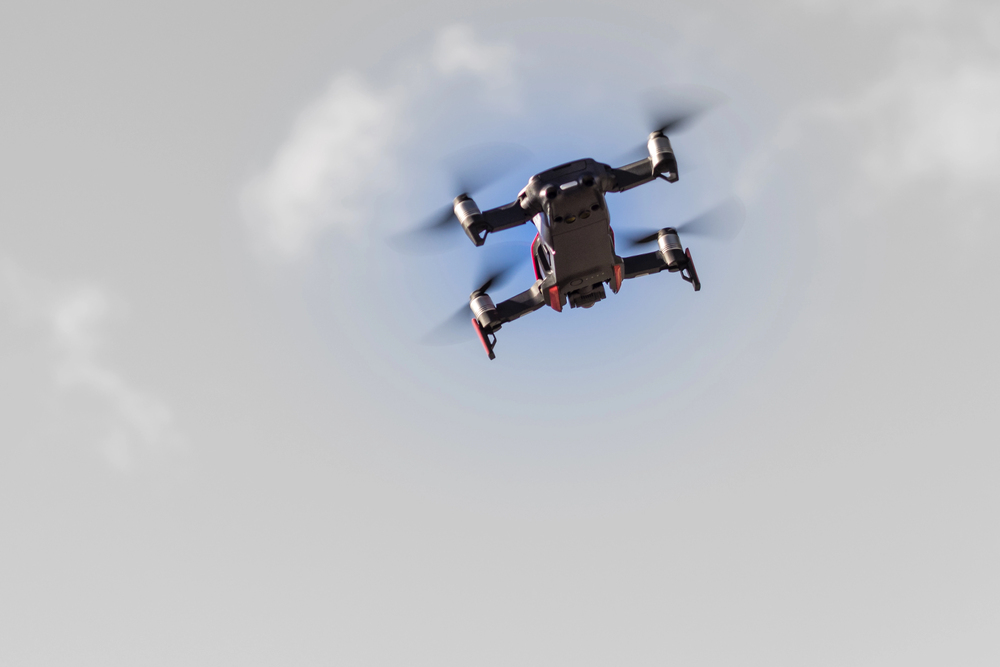
The DJI Air 3 drone has been a standout in the Air Series, offering a balance of portability, performance, and advanced features.
Now, with the launch of the DJI Air 3S, users have an upgraded option with enhanced imaging, improved safety, and new intelligent flight modes.
This blog breaks down the key differences between the DJI Air 3S and DJI Air 3, helping you decide which drone best suits your needs.
DJI Air 3S vs DJI Air 3: Key Specs
The Air 3S and Air 3 share a similar foldable design, making them ideal for travel and aerial content creation.
However, the Air 3S introduces a larger image sensor, forward-facing LiDAR, and Free Panorama mode, making it a more powerful option for those seeking high-quality imaging and advanced safety features.
Check out the table below to get a better look at how their key specs compare.
| DJI Air 3S | DJI Air 3 | |
| Weight | 724 g | 720 g |
| Dimensions
(Length x Width x Height) | Folded: 214.19 x 100.63 x 89.17 mm
Unfolded: 266.11 x 325.47 x 106.00 mm | Folded: 207 x 100.5 x91.1 mm
Unfolded: 258.8 x 326 x 105.8 mm |
| Number of Cameras | 2 | 2 |
| Image Sensor | Wide-angle Camera: 1″ CMOS, 50MP effective pixels.
Medium Tele Camera: 1/1.3″ CMOS, 48MP effective pixels. | Wide-angle Camera: 1/1.3″ CMOS, 48MP effective pixels.
Medium Tele Camera: 1/1.3″ CMOS, 48MP effective pixels. |
| Max Video Resolution | 4K/60fps HDR or 4K/120fps | 4K/60fps or 4K/100fps |
| Flight Time | 45 minutes | 46 minutes |
| Obstacle Sensing | Nightscape Omnidirectional: Forward, Backward, Upward, Downward, Left, Right. Equipped with forward-facing LiDAR. | Omnidirectional: Forward, Backward, Upward, Downward, Left, Right. |
| Max Video Transmission Range (CE) | O4: 10km | O4: 10km |
| On-board Storage | 42GB | 8GB |
Camera Upgrades: Air 3S vs Air 3
The Air 3 was the first in the Air Series to feature a dual-camera system, offering 1/1.3-inch CMOS wide-angle and 1/1.3-inch medium tele cameras, providing increased creative freedom.
The Air 3S improves on this setup by upgrading the wide-angle sensor to a 1-inch CMOS, delivering sharper detail and better low-light performance.
More Air 3S Camera Advantages:
- 1-inch CMOS wide-angle sensor for better clarity and dynamic range.
- 50MP wide-angle camera & 48MP medium tele camera for high-resolution stills.
- 4K/120fps slow-motion video vs 4K/100fps on the Air 3.
- 14-stops HDR vs 12-stops HDR on the Air 3 for greater colour depth.
- 42GB onboard storage, reducing reliance on external microSD cards.
These upgrades make the Air 3S the superior choice for professional aerial photography and videography.
New Intelligent Features on the Air 3S
Both drones include MasterShots and Waypoints for automating flight routes and creating complex camera movements.
The Air 3S, however, introduces:
- Free Panorama Mode: Automatically stitches multiple images for seamless panoramic shots.
- ActiveTrack 360°: Ensures subjects stay optimally framed, even when partially obscured.
- Subject Focusing: Keeps subjects in sharp focus during manual flight.
These new tools make capturing professional-level shots easier and more efficient.
Enhanced Safety: Forward-Facing LiDAR and VSLAM
The Air 3S introduces forward-facing LiDAR, significantly improving obstacle detection in low-light environments. While the Air 3 has omnidirectional obstacle sensing, it struggles in lighting below 15 lux, whereas the Air 3S functions in as low as 1 lux.
Additionally, the Air 3S features Visual Simultaneous Localisation and Mapping (VSLAM), allowing it to return to home (RTH) without needing GNSS signals. This improves flight reliability, particularly in areas with weak GPS coverage.
Flight Performance & Controllers
Both drones offer impressive flight performance with extended battery life than previous Air Series drones, handling stronger winds and colder temperatures.
They also feature the upgraded DJI O4 transmission system, providing a 10km (CE) transmission range.
At launch the Air 3S is compatible with the DJI RC-N3 and DJI RC 2, while the Air 3 supports the DJI RC Pro and DJI RC-N2.
Final Verdict: Is the Air 3S Worth the Upgrade?
The DJI Air 3S delivers major upgrades in imaging, safety, and intelligent features, making it a top choice for photographers, videographers, and drone enthusiasts.
If you already own the Air 3, upgrading is worth considering for better camera quality, advanced tracking, and superior low-light performance.
For those new to the Air Series, the Air 3S is the clear winner, offering the best combination of power, portability, and cutting-edge technology.
Summary
The Air 3 Series is a top choice for drone filmmakers, with the Air 3S standing out for its professional-quality features suited to both hobbyists and professionals.
To buy the Air 3S or get expert advice, contact Heliguy, a trusted UK-based DJI retailer and accredited DJI repair centre, and offer lifetime support with every purchase.
Visit Heliguy today to compare options or speak to an expert.










