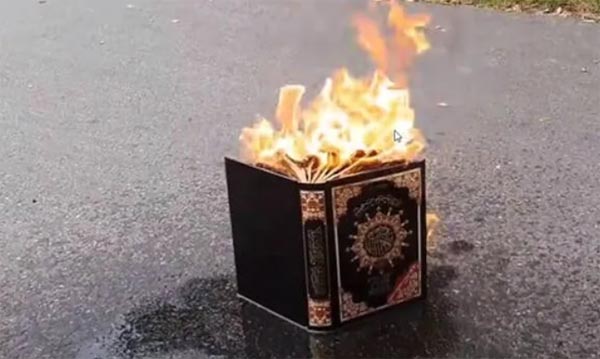
IN A significant moment in the fight to protect free expression in Britain, a man arrested for burning a copy of the Koran in Bradford will not face charges, following intervention by the Free Speech Union (FSU).
Dheyaa, a Christian whose full name is being withheld due to multiple credible threats against his life, arrived in Britain as an asylum seeker fleeing religious persecution. Ironically, he soon discovered that exercising his right to protest in Britain could land him in handcuffs. His crime? Uploading a video of himself burning a Koran as a symbolic stand for freedom of speech and against Islamic extremism.
West Yorkshire Police reacted swiftly, not to protect Dheyaa’s right to speak freely, sadly, but to arrest him on suspicion of inciting religious hatred. Initially, he was treated as a hate-crime suspect and subjected to extraordinary bail conditions which gagged him from discussing religion on social media.
The FSU intervened immediately, challenging these Orwellian bail conditions, instructing a solicitor to defend Dheyaa and covering all his legal costs. Late last month he learned he would face no charges.
That is great news, but our member should never have faced arrest in the first place.
Blasphemy laws were abolished in England in 2008, yet police tried to criminalise Dheyaa’s protest under the Public Order Act 1986. Sections 4A and 5 of this Act ban threatening or abusive behaviour intended or likely to cause harassment, alarm or distress. Prosecutors often add a religious dimension under the Crime and Disorder Act 1998, making such charges potentially even more severe if hostility towards a religious group can be demonstrated.
Read more: No charges in Koran-burning case that should never have been brought











