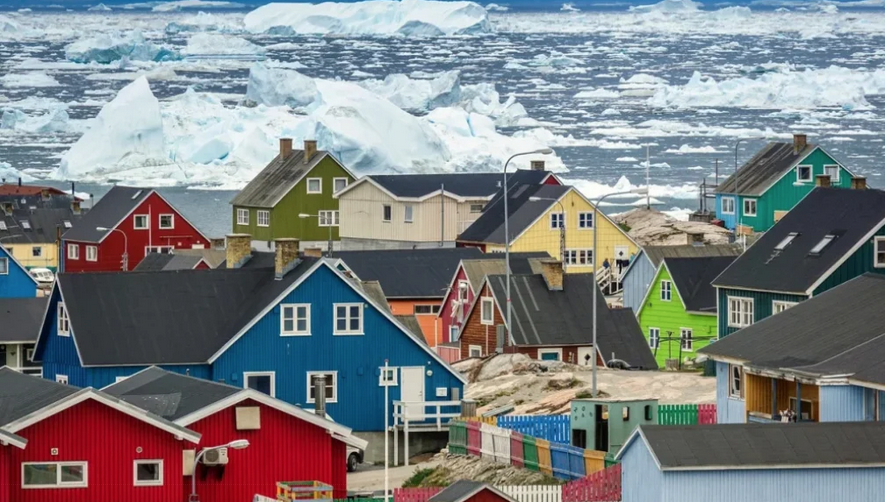
Colorful houses of the coastal town of Ilulissat in western Greenland reflect the effects of political centralization on local communities.
Although Donald Trump is now in office, his statements since the election indicated he has forgotten his pledge to follow an “America first” foreign policy. This is what he promised during the recent presidential contest and what he pledged in the 2016 campaign, but failed to deliver during his first term. While domestic issues are what a president is mostly concerned with, the most important decisions surround foreign affairs, since they often involve war.
Since his lopsided victory over the hapless Kamala Harris, Trump has made few references about reigning in the murderous U.S. Empire, but instead has talked about buying or invading Greenland, seizing the Panama Canal, and making Canada an American state. After the resignation of Prime Minister Justin Trudeau, Trump said that “many people in Canada love being the 51st state,” according to The New York Times, Jan. 7.*
If Joe Biden or Kamala Harris said such things, the MAGA crowd would be up in arms and accuse them of moving the country in the direction of the New World Order.
Whether Trump follows through with such fanciful plans, it shows that he does not understand what lies at the heart of the social and economic problems that America and the Western world face. Trump’s ideas would create greater political centralization, as an American-Canadian or American-Canadian-Mexican-Greenland union would create a gigantic North American state.
Read more: Trump’s Grandiose Political Centralization Scheme Not America-First in Spirit











