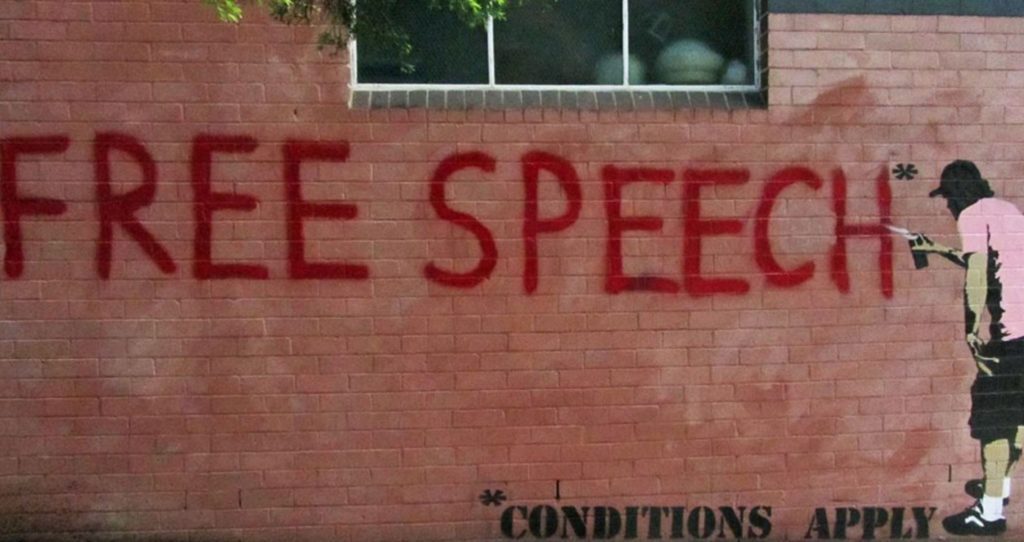
Without being aware of it, we’ve privatized “free” speech in the form of digital monopolies.
Free speech is getting a lot of attention these days, so let’s consider what’s actually “free” about it and what’s not “free.” The general view seems to be that censorship is the threat to free speech, and that’s certainly an issue. But that’s not all that’s going on in the realm of free speech.
Let’s return to the pre-social-media days and consider what “free speech” meant. It did not mean we could demand a newspaper publish our opinion. The newspaper was a private enterprise and its offices were private property. As such, it had the right to choose what it would publish. Free speech meant that we could pass out leaflets on the public sidewalk outside the newspaper offices, or we could launch a competing publication.
On a smaller scale, consider my blog / site. Over the years, some readers have complained that I didn’t host a “comments” forum where they could post their views. I tried one such option many years ago and gave it up as too much work. This is a private enterprise. I pay for the server. The content is copyrighted. I am not obligated to offer a forum for others to post their views. They are free to launch their own blog / site. That’s free speech in the digital age.
In other words, free speech doesn’t mean everyone has a right to address an audience hosted by a private enterprise; it means everyone can stand on the public sidewalk and pass out leaflets or pay for a server to post their views online. I complain about being shadow-banned by various institutions, but they have no obligation to post whatever content I create; they’re private enterprises pursuing their private interests by maximizing profits.
Read more: What’s “Free” About “Free Speech”?











