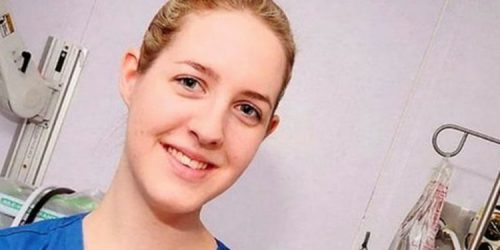
Conspiracy theories have swirled around the former nurse convicted of murdering and attempting to kill babies at Countess of Chester Hospital, but it’s not just armchair detectives who are uneasy – experts from neonatology to statistics have also voiced concerns about the convictions, say Tom Ball and Tom Whipple in the Times. They lay out some of the key areas that have been raised as points of concern:
Insulin testing
Letby was convicted of killing and harming babies using two main methods: injecting air into their bloodstreams and poisoning them with insulin.
Although the case for the former relied largely on a combination of indirect and circumstantial evidence, the prosecution had empirical scientific evidence for the latter in the form of test results showing that two babies had suffered from sudden unexplained drops in their blood sugar, a condition known as hypoglycaemia.
Letby was found guilty of attempting to murder these two babies by injecting synthetic insulin into their feed bags. Both babies survived.
These test results were the closest thing prosecutors had to a smoking gun, and were a keystone for their case as a whole. Their argument ran that if the jury could agree that Letby had deliberately poisoned two babies, they could also reasonably conclude that she had harmed others using different methods, even if the evidence for those were less concrete. …
In court Dr. Anna Milan, a biochemist at the Royal Liverpool Hospital, where the tests were carried out, said the results had shown that insulin had been given to the patients rather than being produced by the pancreas.
She explained that this was evidenced by the fact that tests showed the two babies had very high levels of insulin in their blood, but only a negligible amount of C-peptide. …
C-peptide is produced with insulin in the body. It therefore follows that if there is no C-peptide present, the insulin has not been produced naturally and must have been introduced from outside. However, although this test – known as an immunoassay – is a useful guide for diagnosing hypoglycaemia, it does not test for the presence of insulin itself.
As the Royal Liverpool recommends on its own website, if external insulin administration is suspected, a separate, more specific, analytical method is recommended. This did not happen in the Letby case, however, because both babies recovered soon afterwards.
Read More: How Strong Is the Evidence Against Lucy Letby?











